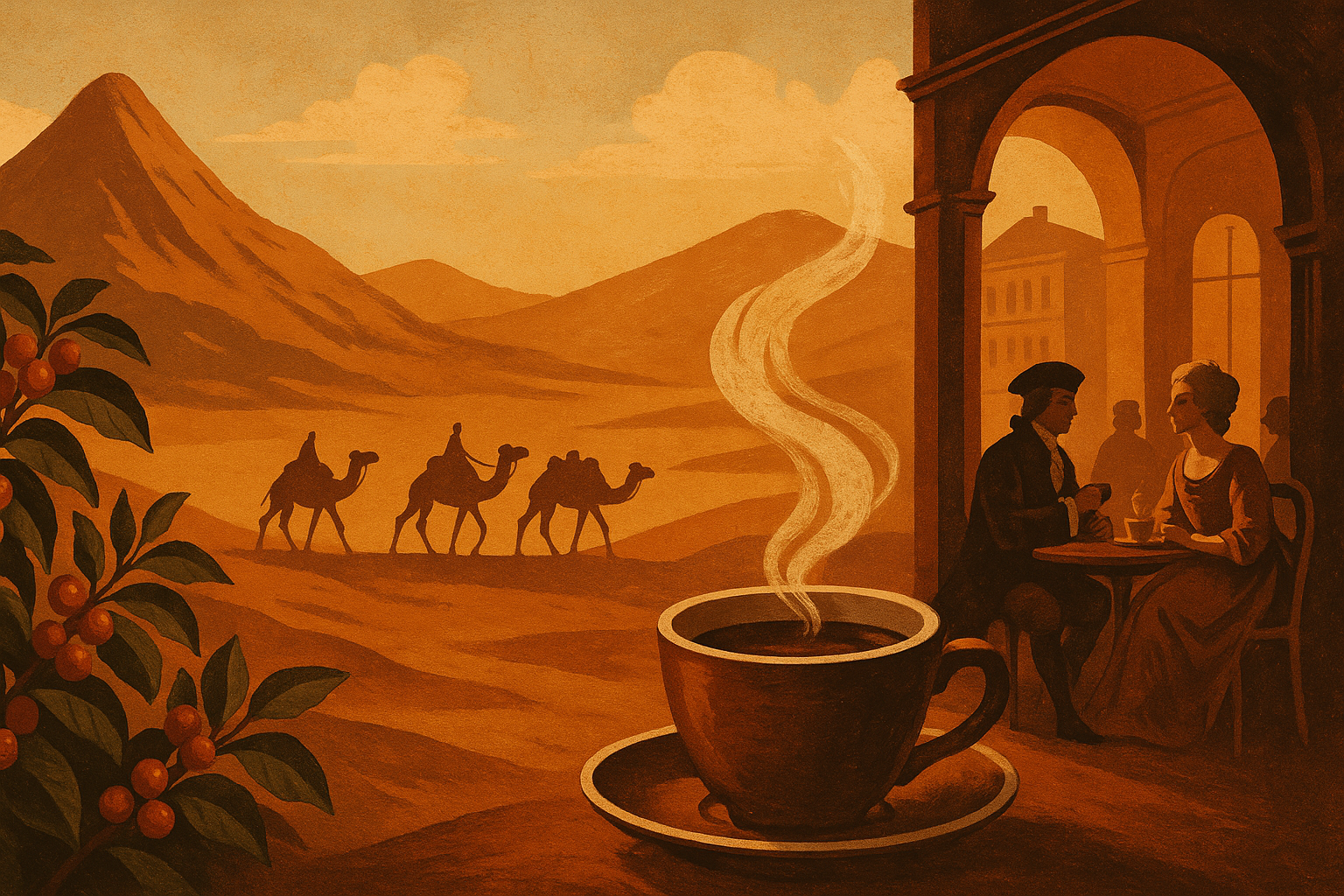
The aroma rising from your cup originates in distant mountains, under clear skies, and on volcanic soils. There, in southern Ethiopia, Coffea arabica ripens into ruby-red cherries. Legend tells of Kaldi, the shepherd who saw his goats dancing tirelessly after eating these fruits. Curious, he brought the cherries to the Sufi monks in Yemen. Ground, roasted over fire, and steeped in water, they became qahwa – the drink that illuminated nocturnal prayers.
A decisive step in coffee history occurred in 1582, when the German physician and botanist Leonhard Rauwolf traveled caravan routes and busy souks of the Orient. In his diary, he described a drink "black as ink, bitter as aloe, yet delicate in fragrance." These words reached Augsburg, spread through European salons, and awakened the curiosity of merchants and aristocrats. Coffee was no longer an oriental secret – it became a dream, a myth, and a pretext for adventurous journeys.
Just a few decades later, in 1618, the Zurich native Johann Jakob Ammann tasted the "wine of Arabia" in a Damascene palace. He noted the rituals, the scent of cardamom, the meticulous preparation. Back in Zurich, he reported to his astonished compatriots about this new drink, calling it "the drink of the Turks." For the first time, the word coffee resonated in Switzerland – and nothing would ever be the same again.
From Venice, where shrewd merchants recognized its potential and filled ship holds with green beans, the aroma of coffee spread throughout Europe. Oxford opened the first coffee house in 1650, London followed two years later; in Zurich and Basel, small steaming cups became the fuel for ideas before the first newspapers and heated Reformation debates. Coffee was now more than a drink: it became a meeting point, a social ritual, and the spark for philosophical and political discussions.
With the 19th century came the era of locomotives and telegraphs – and with it, the first industrial roasteries: the price dropped, caffè latte became a working-class breakfast, and the intoxicating scent of freshly roasted beans filled streets and train stations. In 1912, the Swiss company HAG invented decaffeinated coffee; in 1938, Nestlé in Vevey launched instant Nescafé. The question "Shall we go for a coffee?" established itself as a universal invitation to pause daily life, share thoughts, and let time stand still for a moment.
A Sip of Italian History: The Promise of La Bottega del Caffè
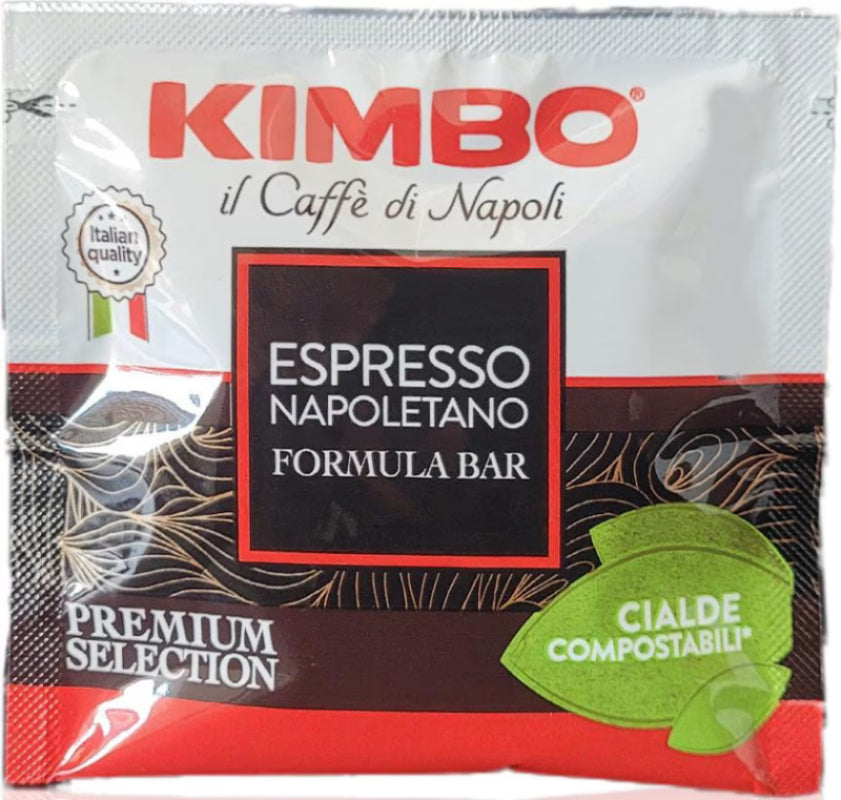
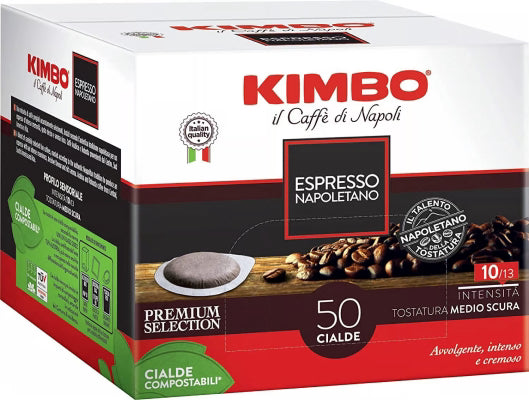
Today, this centuries-old story continues – bean by bean, cup by cup. At La Bottega del Caffè, we carefully select the best products. In our online shop, you will find the brands that have shaped Italy's espresso culture – Lavazza, Illy, Borbone, Hausbrandt – symbols of a rich and passionate tradition. They are complemented by typical specialties from Abruzzo: Sulmona confetti, bronze-drawn pasta, extra virgin olive oil, pastries, and mountain sweets.
Each product is selected with the same curiosity that drove Rauwolf and with the same astonishment that Ammann felt: We want to bring the best of Italian taste directly to Switzerland – ready for enjoyment, authentic. Fast deliveries, loving details, and stories about each blend are part of our offering, because we believe: Every bean contains a fascinating story.
Raise your steaming cup: Listen to the echo of Kaldi, the rustling of caravans, the lively murmur of the first literary cafés. From the mystery of the Orient to your daily indulgence, coffee reminds us that every morning is a new beginning – and every sip can be a journey into history and taste.Discover our exquisite selection of Italian coffees, let yourself be seduced by the authentic aroma, and bring a piece of rich Italian tradition to your table. 🇮🇹🇨🇭☕