How should you clean and descale an E.S.E. coffee pod machine? Remove used pods shortly after brewing when safe, keep the pod holder and drip tray clean, use fresh water and follow the descaling instructions for your specific model. These simple habits help limit coffee residue and limescale buildup.
Whether you own a Faber, Didiesse Frog or Baby Frog, Aroma Plus or Spinel, routine care matters. However, removable parts, approved descaling products and descaling procedures may differ significantly between models. Your exact machine's instruction manual always takes priority.
Quick E.S.E. machine maintenance checklist
- After every espresso: remove the used pod in accordance with the manufacturer's safety instructions.
- Daily: empty the drip tray, wipe away visible coffee residue and check the water supply.
- Regularly: clean the pod holder and any removable parts approved for cleaning; check for visible signs of seal wear.
- When required: descale using a model-appropriate method and a compatible product.
- If a problem persists: stop using the machine and seek qualified technical help instead of attempting unsafe repairs.
Safety first: before cleaning, switch off the machine, unplug it and allow it to cool completely. Never immerse the appliance in water, open electrical components or use sharp implements and aggressive chemicals for cleaning.
1. Remove used E.S.E. pods promptly
A used pod should not be left unnecessarily in the hot, damp brewing chamber. Faber's care guidance recommends removing pods after brewing because a completely dried-out pod may stick to a seal. If a pod is stuck, follow your model's instructions rather than pulling it free with force.
A misplaced pod or filter-paper residue can sometimes affect the water flow. Check visible surfaces carefully without prying open parts or attempting unauthorised disassembly.
For details on the correct pod format, see our 44 mm E.S.E. pod compatibility guide.
2. Clean the pod holder, filter and drip tray
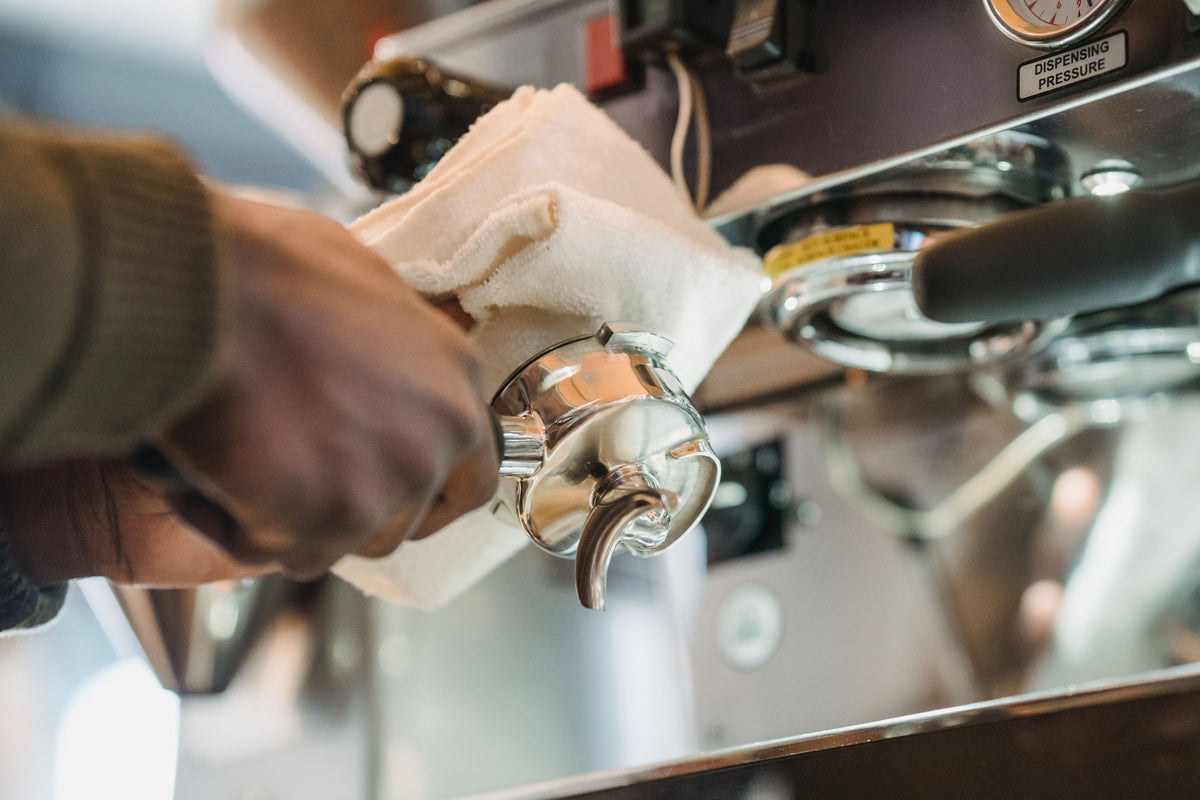
Coffee oils and tiny grounds can accumulate on the filter and in the pod holder. Some machines have a removable holder, while others require a different approach. Only follow the cleaning steps approved in your machine's instructions:
- Switch off, unplug and allow the appliance to cool completely.
- Remove only the parts that the manufacturer identifies as removable.
- Clean approved parts with water and a soft cloth or brush, if permitted.
- Allow the parts to dry and reinstall them according to the manual.
- Empty the drip tray and wipe down accessible exterior surfaces regularly.
A cleaning tablet designed for traditional espresso machines is not automatically suitable for every E.S.E. pod machine. Use only approved cleaning products and methods.
3. Use fresh water and protect the water circuit
Fresh drinking water helps with hygiene and flavour. Make sure the tank or bottle contains enough water and, where applicable, the inlet tube is properly submerged. Do not deliberately run the water pump dry.
Rinse removable water tanks in the manner permitted by the manufacturer and replace water regularly. If a machine has been out of use for an extended period, follow the manufacturer's instructions for bringing it back into service.
4. How often should an E.S.E. machine be descaled?
Limescale buildup depends primarily on water hardness, frequency of use and machine design. Some Faber and Didiesse instructions mention a general interval of around three to four months. This is a guideline rather than a universal schedule; harder water or heavy use may require more frequent attention.
Choose a descaler suitable for your specific appliance and follow the correct dose, contact time and rinsing procedure stated in both the machine manual and the product instructions. Bottle-fed machines may require a completely different process from machines with a water tank. Do not improvise a one-size-fits-all descaling procedure.
Vinegar is not a universal substitute: Didiesse explicitly says not to use vinegar as a descaler in its instructions. Our range includes Aroma descaler (250 ml), based on citric and malic acids. Always check compatibility before use; a product sold for coffee machines is not necessarily approved for every model.
5. Maintenance notes for Faber, Didiesse, Aroma and Spinel
Faber
For Faber, promptly removing used pods, ensuring adequate water and following the descaling guidance are important. Pod holders and service components differ among models. The Faber 44 mm Service Kit contains descaler, a filter and an O-ring for compatible machines. Check your model before purchasing. Other parts are available in our Faber spare parts collection.
Didiesse Frog and Baby Frog
Didiesse manuals describe cleaning the drip tray and model-specific removable parts. Frog and Baby Frog do not have identical designs: their water supply, pod-holder assembly and descaling procedures may differ. Refer to the instructions for the exact machine you own.
Aroma Plus
Check the condition of the pod holder, seals and other accessible components. Our shop offers an Aroma pod holder for selected models and an Aroma spare parts collection. Before replacing anything, confirm the exact model and part number.
Spinel
Spinel makes several domestic and commercial E.S.E. machines, including versions equipped with steam. On models with steam, the steam wand also needs maintenance in accordance with the manufacturer's instructions. Do not open the casing to clean internal pumps, tubes or heating components yourself.
6. Slow coffee flow, leaks and unusual pump noises
- Coffee flows more slowly: check the water supply and pod position. Residue or limescale may be possible causes, but these symptoms do not establish a diagnosis.
- Water leaks around the pod: switch off, allow the machine to cool and check only accessible areas. Stop using the machine if the leak continues.
- The pump sounds unusually loud: confirm that there is enough water and the inlet tube, if present, is correctly positioned. Avoid dry running.
- The coffee tastes different: check water freshness, pod condition, cleaning and extraction volume.
- No water flow or an electrical fault: stop using the appliance and obtain professional assistance. Do not open the housing.
A worn seal or damaged pod holder cannot be fixed by descaling. Not every coffee-machine problem is caused by limescale.
Frequently asked questions
How often should I clean the pod holder?
Remove used pods after brewing and clean visible coffee residue regularly. Follow your specific model's instructions for any more thorough cleaning or disassembly.
Can I use vinegar to descale a Faber or Didiesse machine?
Vinegar is not a safe blanket recommendation; Didiesse explicitly prohibits it. Choose a compatible descaler and follow the manual and product label.
Why is my machine producing very little coffee?
Possible causes include too little water, a misplaced pod, buildup or a technical fault. Start with safe external checks and seek a professional assessment if the problem persists.
Can I remove the pod holder myself?
Only if your exact machine's instruction manual allows it. Unplug and cool the machine before cleaning. Never open electrical components.
Are spare parts universal across E.S.E. machines?
No. Seals, filters and pod holders can differ even among machines from the same brand. Always match the part number and machine model.
Conclusion: simple habits for more consistent espresso
Removing used pods, using fresh water, keeping approved components clean and following a model-specific descaling routine can help maintain your machine. Explore our 44 mm E.S.E. coffee pod machines and the matching 44 mm E.S.E. coffee pods.
Manufacturer documentation
For specific maintenance work, consult the manual for your machine version. The Faber manuals and the Didiesse Baby Frog manual are useful references. Always verify that the document matches your model.