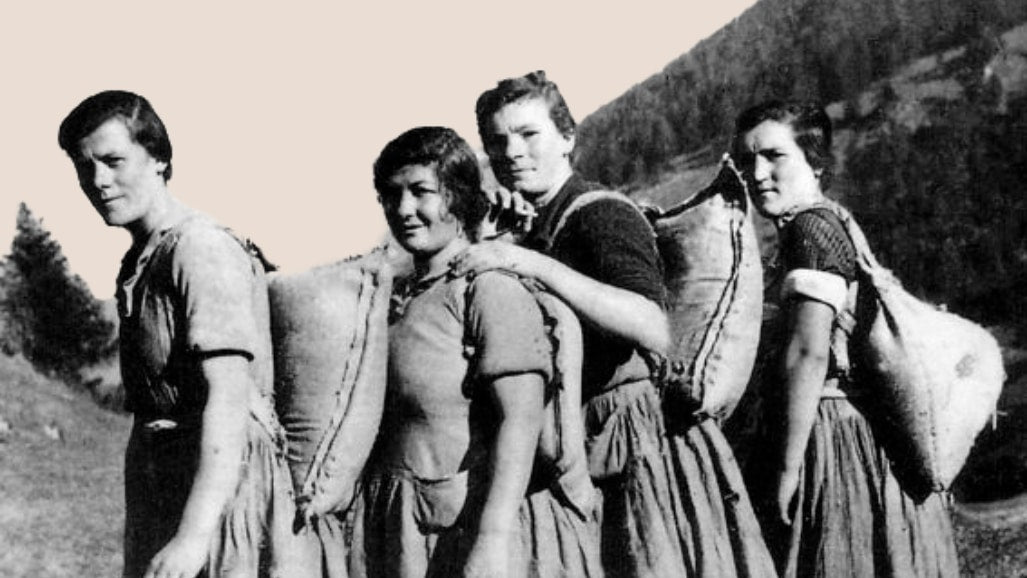
Sacks on their shoulders, a border ahead: coffee smuggling between Switzerland and Italy is about more than a longing for espresso. Behind the romantic image were economic interests and exhausting work. Understanding the story means distinguishing periods, regions and goods.
Why was coffee smuggled from Switzerland into Italy?
The main direction was from Switzerland into Italy. Different duties and levies made goods more expensive on the Italian side. Coffee, alongside other commodities, became part of a cross-border black market. [1]
Three periods, rather than one smuggling story
19th and early 20th centuries
Adriano Bazzocco’s study covers border smuggling from 1861 to 1939. The phenomenon therefore did not begin only after the Second World War. [2]
Second World War
The flow sometimes reversed: large quantities of rice travelled from Italy into Switzerland. This supply history should be distinguished from coffee smuggling. [4]
1960s to the mid-1970s
SRF documents a boom in coffee and cigarette smuggling from Val Poschiavo into neighbouring Italy. [5]
Spalloni, bricolla and ramina: what do the terms mean?
Spalloni were the carriers; their carrying containers were called bricolle. Ramina, by contrast, meant the border fence. Keeping these words separate helps readers understand accounts of people, equipment and border controls. [1][2]
The people behind the sacks
The Swiss Customs Museum’s wartime documentation describes men, women and children from Italian border villages. The dangerous work offered a way to supplement meagre incomes. [3]
We therefore do not present this past as a carefree adventure. Economic necessity can explain choices without making the trade legal. Remembering individual courage need not mean overlooking the risks and conflicts.
Beyond Ticino: coffee from Val Poschiavo
Val Poschiavo also mattered: regional cultural documentation describes coffee and cigarettes carried into Valtellina after the war, alongside the many coffee roasteries in Brusio. [6]
Why did this trade decline?
The Italian lira’s depreciation in the 1970s made buying goods in Switzerland more expensive, weakening the incentive to smuggle. There is no single end date that applies to every commodity and border region. [4]
From border history to your coffee break
This history does not establish a connection between past smuggling and brands in our current range. At La Bottega del Caffè, the focus is on enjoying and choosing your coffee: explore our whole coffee beans and 44 mm E.S.E. pods.
To follow the cultural thread, read about Italian coffee rituals or discover Caffè Leccese from Salento. Between a historical story and your next cup, there is always room for curiosity.
Frequently asked questions about coffee smuggling
Was Italian coffee smuggled into Switzerland?
For the trade described here, the evidence mainly supports the opposite direction: purchase in Switzerland and illegal entry into Italy. [2]
Who were the spalloni?
Carriers who transported goods across the border. The term describes an activity, not a coffee brand. [2]
Was coffee smuggling confined to Ticino?
No. The connection between Val Poschiavo and Valtellina is also documented. [6]
Did it end exactly in 1970?
No. SRF describes a period of strong activity in Val Poschiavo until the mid-1970s. [5]
Are all romantic smuggling stories verified?
No. This article identifies its sources and does not present unsupported dialogue, exploits or generalised load weights as established facts.
Sources and historical context
The sources cover different regions and periods. They are not combined here into a single account assumed to apply everywhere.